
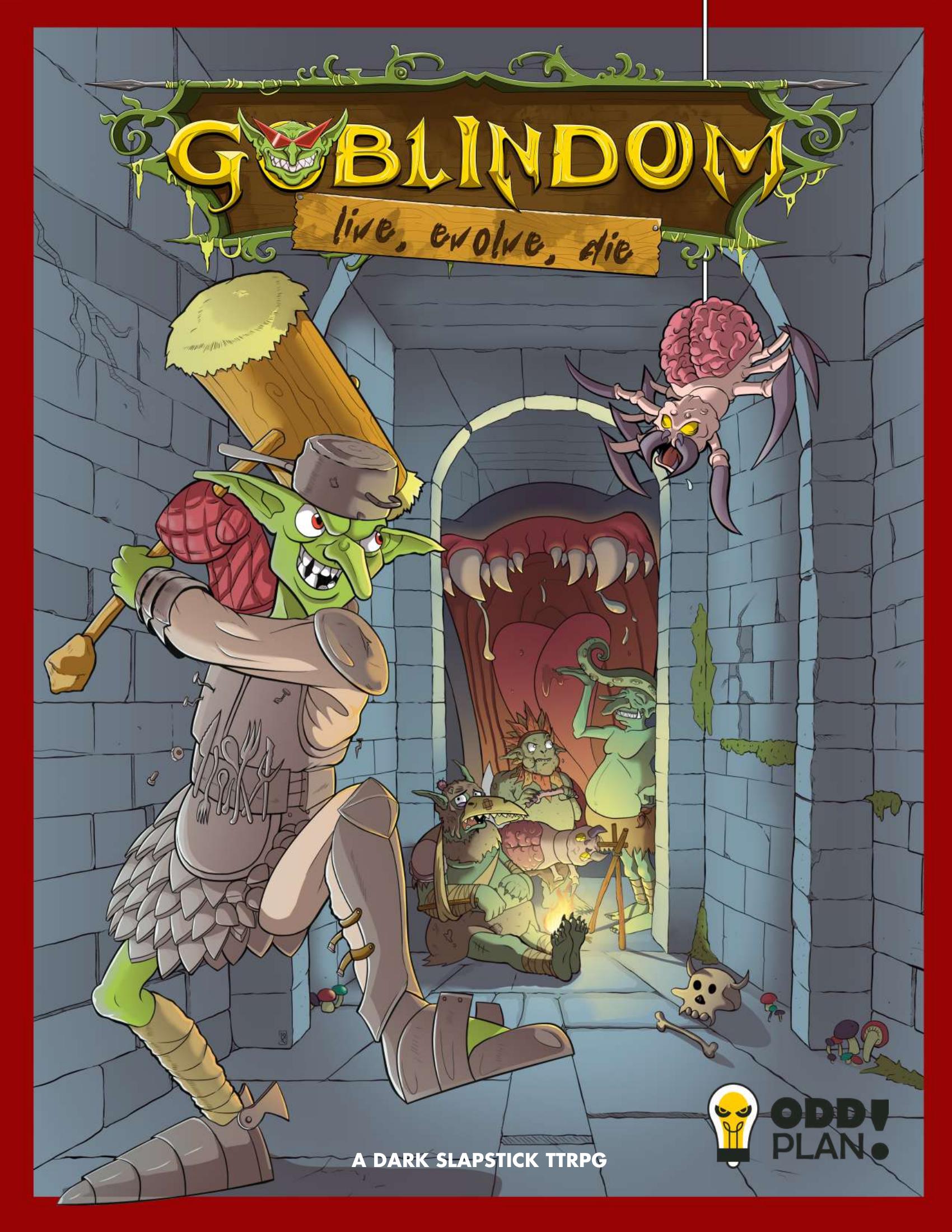
GOBLINDOM
With all the rules you need for a one-shot that will end hilariously bad.
What's inside:
- Playing The Game: The Complete Core Rules
- The Adventure: Rat Hunting
- A simple and effective Bestiary
- Four pre-generated goblins, ready to play
What Is Goblindom?
Goblindom is a game about exploring, discovering, and overcoming trials through the creativity, initiative, and cunning of the players as they interact with the world, while also navigating the need to survive in a hostile ecosystem as utterly insignificant life forms.
- Goblins are not heroes: they are lowly creatures, very weak compared to the rest of the world around them, with no respect for their own safety or that of others. Such is their way of life: always trying to get what they want without giving a second thought to the consequences.
- Violence is silly and grotesque: just as in the Tom & Jerry cartoon, violence is extreme and gruesome, but must never become offensive or disturbing for the rest of the group.
- Play to discover: explore the world, live adventures, weave amazing stories, and let the group experience them together.
Goblins
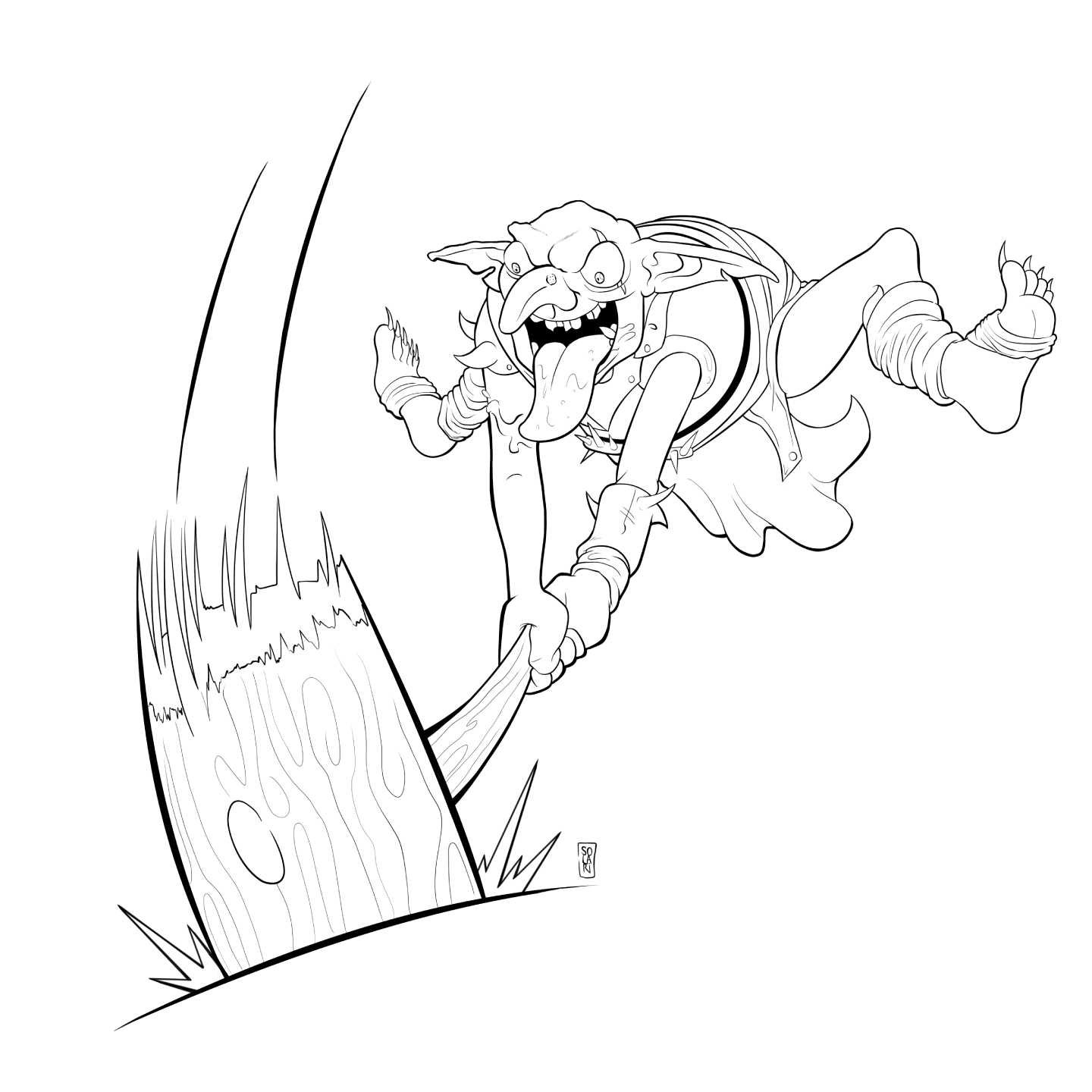
As magic slowly accumulates in a Dungeon, sometimes the leftover of this eldritch force — the very waste of an unknown energy — can pool in the depths of the earth, forming a wretched, disgusting primordial ooze with rainbow hues and an abominable smell. These formations have had many names attributed to them by scholars: "Generative puddles", "Demi-primordial matter", and the particularly popular "Disgusting garbage", but for the Goblins, it is simply their lovingly despised home.
At random intervals, sometimes spontaneously and sometimes brought about by the bizarre rituals of insane Goblin Shamans, the Generative puddles can be activated, kickstarting a process similar to that which creates all other Creatures, though noticeably flawed. The Goblins, undeniable wastes of magic, are born almost disturbingly amid agonizing gurgles and magical instability, immediately manifesting mutations that perfectly reflect their chaotic, volatile nature. This makes every Goblin unique, though it usually leaves them feeling more miserable than special. When a new generation of Goblins is born, the newborns are often spiteful and violent, possibly because they still must face the terrible reality of being surrounded by Goblins. Said hostility only increases when they finally realize that they are also Goblins.
So, in the most sensible solution the Shamans could think of to placate such tempestuous minds, the cave where the generative puddle is located is sealed for an indefinite period, starting the well-respected traditions of the Slaughterfest. Only the most stubborn and hateful Goblins survive through unfiltered violence, cunningly using every dirty trick they can think of, or tapping into the mysterious thingamagik.
The Dungeons
These complex, nonsensical biomes vary widely in depth and danger. Still, all are composed of different "levels," well-defined areas specific to the local ramification of magic, sometimes determined by a dominating Element, resulting in an ecosystem with nearly unique creatures and characteristics. The dungeons aren't just labyrinthine caves, and though they always appear underground, many levels of a dungeon may appear identical to a forest of the outside world, its "sky" perfectly illuminated by glittering gems on the walls, floating wisps of fire, or by a miniature sun made up of Light magic collecting on the cave's ceiling. Dungeons aren't simple anomalies of stagnating energy but are an essential part of the world, necessary to collect excess magic before it rots. This also means that Dungeons are often rich in magical crystals, arcane fuels and oils, and other priceless resources that any human alchemist would kill for. And indeed, they do.
Dungeonology, the scientific study of Dungeons, is still a young academic field in the Overworld, currently engaging only a handful of curious scholars — too frail to don armor and venture below in search of first-hand knowledge and incommensurable riches. However, when it comes to nomenclature, dungeonologists have already found a name for everything. For instance, the patchwork constellation of caves, tunnels, and ravines most commonly inhabited by goblin tribes is collectively called "Goblindom." A sort of informal state where the ruthless, chaotic rules of the little greenskins reign supreme and bubbling pools of newborns appear with predictable regularity.
Goblins themselves never use this term, mainly because they don't know it. Even if they did, they would find the concept utterly stupid: everywhere they go is part of the Goblin Kingdom.
Playing The Game
In a role-playing game such as Goblindom, players assume the role of their Player Characters (PC) within an imaginary world described by the GM, contributing to the creation of a collective story shared by the group. When the outcome of their actions is uncertain, such as in adverse situations or against dangerous foes, dice are used to determine the result, leaving success or failure to interpretation, creativity, and luck.
The Rank
The Rank indicates the difficulty or the level of anything in-game, PCs included. As PC, you have a Base Rank of 0 (you're a Goblin, what did you expect?), but you can use the Keywords on your Character Sheet to increase it while attempting a Challenge to try and succeed in the best way possible.
Non-player characters (NPCs) receive a fixed Rank that they cannot change by themselves unless a Quality or outside effect specifically states otherwise. What follows is a simple table of examples, to give a clearer idea of what kind of Creature usually fits a certain Rank within a Dungeon.
| Rank | Example |
|---|---|
| 0 | A Halfblin |
| 1 | An "Average" Goblin |
| 2 | An experienced Goblin who evolved at least once |
| 3 | A simple trap, like a hole full of pointy sticks |
| 4 | A toxic gas cloud |
| 5 | A small avalanche |
| 6 | A weird, magical tornado |
| 7 | A Paladin or a Dark Lord |
| 8 | A Dragon |
The Keywords
In Goblindom, the words on your Character Sheets are called Keywords, and they're what you will be relying on to overcome Challenges most of the time. There are 3 Keyword Categories:
| Characteristics | The physical and mental might of the PC, measured through Vigor, Cunning, and Instinct. |
| Proficiencies | What the PC can do, and how well they do it. |
| Mutations | Goblins are subject to unexpected changes since their birth; some of them are even useful sometimes! |
Goblin Luck
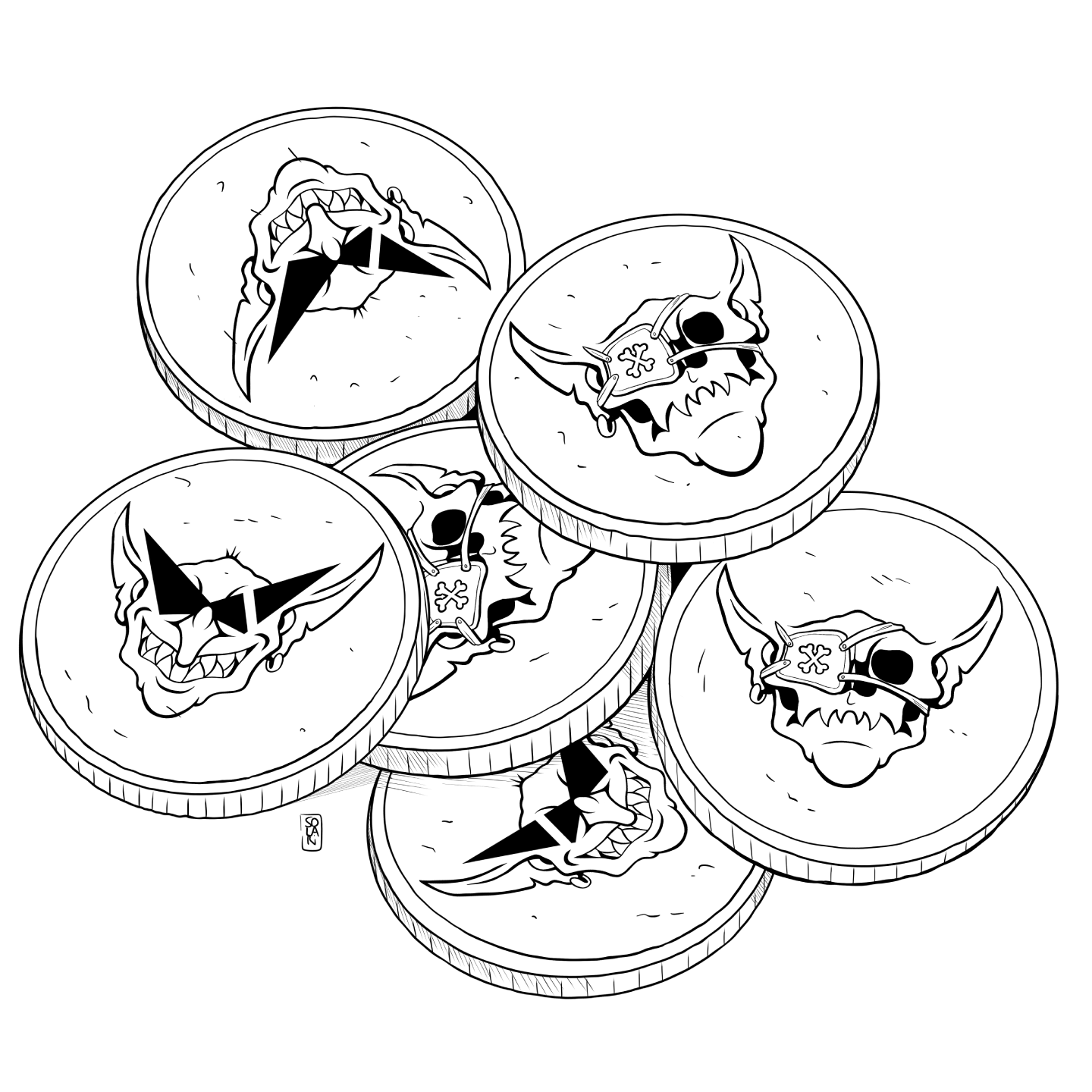
Each player at the table has one coin, called a Goblin Luck Coin, with two distinct faces, one representing Fortune and the other Misfortune. At the start of the session, each player throws their Goblin Luck Coin into the air and begins the game with their coin on whichever side it landed.
The Challenges
In Goblindom, Dice are rolled only when the outcome of a PC's specific action is uncertain and the situation may have consequences. These situations are called Challenges. Some examples of challenges can be:
- Discreetly sneak into an adventurer's camp.
- Try to cave in the adventurer's head with a rock.
- Lockpick a chest stolen from the adventurer.
- Lose your patience and try to break the chest open.
- Properly medicate your injured hand after angrily hitting a chest.
All Challenges have a Rank, indicating the complexity of the action that's being attempted and how plausible it is for the PC to succeed. Clearly state what you wish to obtain from your actions and how, and the GM will declare the Challenge's Rank they deem most appropriate for the context. After all, cutting down an ancient oak tree with just your teeth or with a fireball is two very different actions. Then it will be up to the player to describe how the PC uses their characteristics, Proficiencies, mutations, and other special resources to try and make a Challenge as little painful as possible.
Defining the PC's Rank
After the GM has declared the Rank of the Challenge, you'll need to apply the Keyword that will help you overcome it. Each properly used Keyword increases the PC's Base Rank by 1, unless something like an enemy's Quality explicitly prevents it. Keep in mind that you can use only one Keyword from each Category (you cannot, for example, use both Vigor and Instinct in the same Challenge). With a solid strategy and thorough preparation, it's possible to earn an extra rank increase in a specific Challenge.
The Hardships
As GM, you can apply some effects, called Hardships, to increase a Challenge's Rank by +1 for each Hardship. Hardships can be, for example, Status and Disgrace that afflicts the PC, or Environmental effects and Qualities of enemies. Even a PC's Mutations can be used as Hardships if deemed fit for the situation, if the Challenge is in a situation in which that specific mutation would become more of a hindrance than an advantage — for example, a character with particularly sensitive ears might fail to focus on a task while a horde of screaming monkeys wail at the Bunch.
Making The Roll
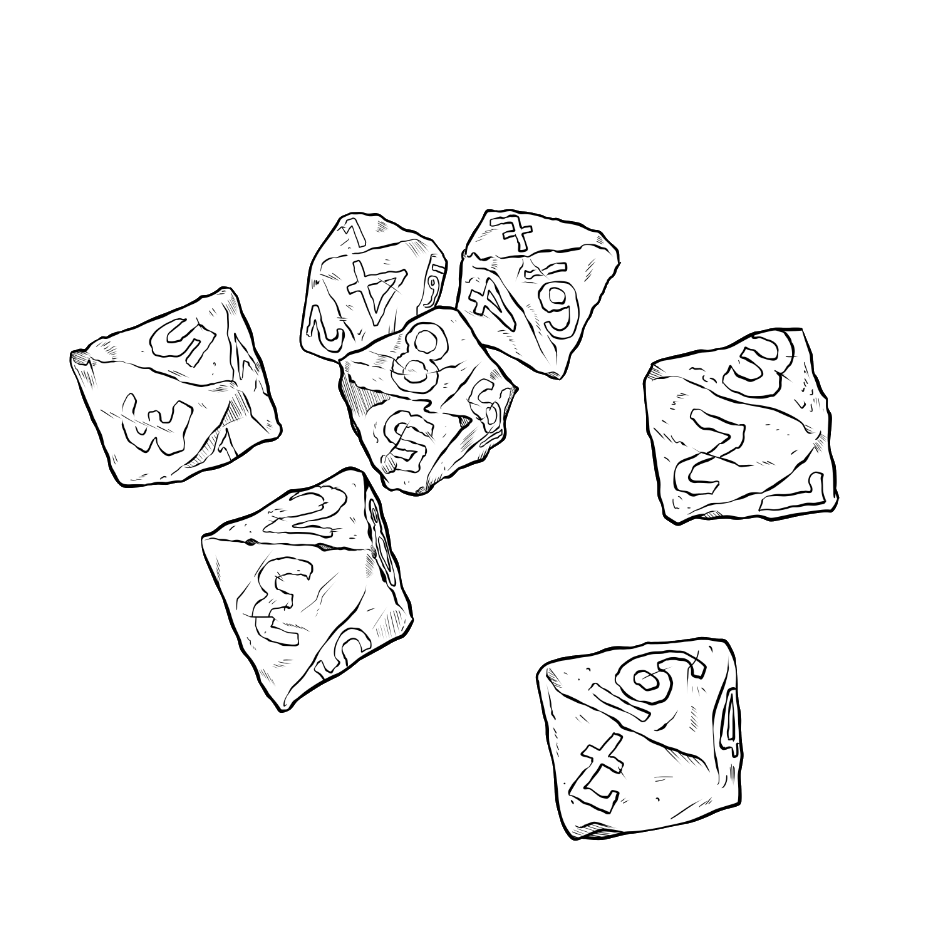
Each time a PC faces a Challenge, you must roll 2d8 and as many additional d8s as the difference between the PC's Rank and the Challenge's Rank. If the higher Rank is the PC's, then the roll is at Advantage; therefore, you take the two highest rolls. If the higher Rank is that of the Challenge, then the roll is made at Disadvantage; therefore, you take the two lowest rolls.
| Result | Outcome |
|---|---|
| 7 or less | The Action fails with a Mild Consequence, or it succeeds but has a Dire Consequence. |
| 8-11 | The Action succeeds, but it has Mild Consequences. |
| 12+ | The Action succeeds at no cost! |
Consequences
When the roll causes Consequences, the GM determines exactly what happens. In case of a result of 7 or less (referred to as 7-), the players who made the Challenge choose between: the Action causing Mild Consequences but yielding no results (so the action fails), or the Action causing a Dire Consequence but achieving the desired effect, resulting in a success.
Mild Consequences
- You lose 1 Health.
- You cause an environmental effect that lasts for 1 Scene, such as an alarm being rung or a fire that needs to be extinguished.
- If you're looking for information or resources, you might not find them, but you can discover where to find them instead.
- You call undesirable attention to yourself.
- You only partially succeed, for example, finding yourself in a precarious position after climbing up a tower.
- If you bribe, threaten, or trick someone, they might fall for it, but it might cause problems for you later.
- If you seek information, you might only partially recall it.
- A piece of equipment breaks and can only be repaired during a Full Rest.
Dire Consequences
- You lose 2 Health.
- An environmental effect that lasts beyond the scene and will require one or more Challenges to be resolved.
- If you're looking for information or resources and don't find them, you might still get the chance to find out where you can… for a price.
- You call undesirable and dangerous attention to yourself.
- You can convince someone, but they might betray you, draw dangerous attention to you, or cause further problems.
- If you're looking for information, you'll find it, but some might be inaccurate or even contradictory.
- A piece of equipment is permanently destroyed.
Getting Hurt
Each Goblin has a Health Counter composed of 4 Pieces, representing how much physical and mental damage the Goblin can take as a result of a Consequence, and 2 Statuses that describe more specific conditions that might hinder him. Except for particular circumstances, you mark your first Status when you fill the first Piece, and the second Status when you fill the third Piece. When the Health Counter is full or when a PC receives a third Status due to a special effect, the PC Leaves the Scene.
When determining the Rank of a Challenge, the GM can use one of the PC's Statuses as a Hardship: a broken arm may render handiwork drastically more difficult, or a terrible migraine will break a goblin's concentration, and so on.
Leaving The Scene
There are many ways a PC can Leave the Scene, chosen based on the context of the current Scene and the Challenge that prompted the PC to Leave the Scene. When a PC Leaves the Scene, the GM agrees with the PC's player what characteristic would be most impacted between Vigor, Instinct, or Cunning, and rolls 1d8. On a 1-4, roll on the first Disgrace table for the chosen Characteristic; on a 5-8, roll on the second, and mark down the result.
After the Scene ends, the PC re-enters the Scene with their Health Counter half full. Most of the Disgraces consist of a simple description of the damage that has befallen the PC, and from that moment, the GM can use it as a Hardship during a Challenge.
Some monsters can inflict Special Disgraces thanks to their Qualities. The Special Disgraces aren't listed in the tables below, but are described in their stats. They follow the same rules as the normal Disgraces.
Vigor Disgraces
| d8 | Table 1 (roll 1-4) | Table 2 (roll 5-8) |
|---|---|---|
| 1 | Dismemberment: one of your limbs was cut off, ripped off, blown off… you get the idea, it's not there anymore. | Weak point: this poor wound never really healed, just waiting for an unlucky hit. If the PC obtains a 7- during a Challenge with two or more 1s in the dice pool, they lose 1 Health in addition to any other Consequence. |
| 2 | Broken Fingers: one of your hands was smashed just a bit more badly than it could handle, and it never healed quite right, leaving you with a weak grip and trembling fingers. | Warm-Blooded: you feel like you're constantly burning up, which makes you prone to fatigue and forces you to dress lightly. |
| 3 | Stumbler: your body moves almost, almost, like you want it to. The faster you try to move, the more difficult it is to keep yourself standing. | Memento: your scar just won't let you forget about it, tormenting you day and night with sudden, sharp pains. |
| 4 | Toothless: your poor old chompers are just gone, ruined beyond repair. You can no longer bite or chew effectively. | It does not bend that way: a limb of yours healed in a slightly wrong position, making it weaker and clumsier. |
| 5 | Broken nose: your nose is now an even sillier shape, and you can also no longer smell anything. | Ruined voice: your poor vocal cords look like an amateurish attempt at embroidery. You can only barely speak in whispers. |
| 6 | Gluttonous: you're just always so hungry, struggling to focus on anything else unless you're at least chewing on something. | Frantic heartbeat: physical effort is possible, but prolonged effort quickly leads to escalating pain. |
| 7 | Lead feet: a strange lethargy has washed over you. You are always treated as if at Heavy Initiative. | Cold-Blooded: you always feel cold, no matter what, tormenting you into covering yourself as much as possible and seeking sources of warmth. |
| 8 | Against all odds: you now look astoundingly beautiful! Gain +1 Rank in any Challenge to communicate with a sentient being. | Oh wait… I'm okay: you're somehow perfectly unharmed! You do not mark down this Disgrace. |
Instinct Disgraces
| d8 | Table 1 (roll 1-4) | Table 2 (roll 5-8) |
|---|---|---|
| 1 | Recluse: you grow anxious and more prone to make mistakes when you become the center of attention. | The shakes: whenever you find yourself outnumbered or face a Challenge with 4 degrees of Disadvantage, you just lose your cool. |
| 2 | Half-Blind: you've either lost one of your eyes or it doesn't quite work right anymore, making aiming and spotting quite a chore. | Half-Deaf: everything sounds… numb, like you're on the other side of a wall. |
| 3 | Anxious: you feel terribly self-conscious, becoming terrified of the prospect of failure, outside judgment, or other forms of social pressure. | Night terrors: any Challenge to interact with the unconscious PC (healing them while passed out, waking them quietly) Scales Down. |
| 4 | Reckless: you've lost all fear of pain or death. You can no longer wear armor, but you're entirely immune to fear effects! | Hazy sight: you struggle to notice details, and reading, if you could to begin with, is now almost impossible. |
| 5 | Obsessive: choose something, even just vaguely related to how you Left the Scene, to obsess over. | Shaky hands: you can't hold steady to save your life, making aiming a long shot or precision work particularly difficult. |
| 6 | Fight or Fight: at the start of a fight, your first Challenge incurs a Hardship if it doesn't involve immediately attacking someone or something. | Mixed up senses: your senses are all scrambled together and never by themselves. |
| 7 | Phobia: choose something related to how you Left the Scene to form a Phobia about. +1 Rank in any challenge to flee from the source of your Phobia. | At the edge of your vision: whenever you ask the GM what you see, they always describe unspecified threats nearby, whether true or not. |
| 8 | Sixth Sense: once per session, +1 Rank to a Challenge to avoid damage or danger. | Oh wait… I'm okay: you're somehow perfectly unharmed! You do not mark down this Disgrace. |
Cunning Disgraces
| d8 | Table 1 (roll 1-4) | Table 2 (roll 5-8) |
|---|---|---|
| 1 | Weak tongue: your speech comes out slurred and messy, making you unclear or unconvincing. | Long-winded: you're both annoying and very noticeable, constantly speaking or forced to make noise. |
| 2 | Confused: coherent reasoning is a struggle for you, making it difficult to reach any valid conclusion from observation alone. | Violent: you can't defeat an opponent without killing them, causing a Hardship on your first Challenge after killing an enemy. |
| 3 | Vengeful: +1 Rank against the type of creature that caused this Disgrace, but -1 Rank in any Challenge if one of them is present but isn't the target. | I know what I'm doing: you grow impossibly confident, and restless watching other Goblins attempt tasks you'd definitely solve better. |
| 4 | Chronic migraine: sudden twinges of pain when you overthink. If you ever die, your head explodes. | A new goblin: you may change your name and reroll your Proficiencies (except the one from your Role). |
| 5 | Untrusting: you struggle to work with others, refusing help from companions, items, or devices you're not familiar with. | Amnesiac: whenever you take a Full Rest, reroll one Proficiency at random (never the one from your Role). |
| 6 | Thingamagikhaos: whenever you roll a Jackpot in a Challenge, reroll the Dungeon's Alignment, instantly changing the nature of all magic on this level. | I talk can good: you have the weird habit of switching words around without even noticing. |
| 7 | Superstitious: you refuse to touch anything magical. Shamans can still cast, but desperately seek a "scientific" explanation. | I know the truth: you're firmly convinced of one specific, groundless idea. |
| 8 | Awesome Scar: +1 Rank in challenges to appear tougher, intimidate, or impress. | Oh wait… I'm okay: you're somehow perfectly unharmed! You do not mark down this Disgrace. |
Resting
| Taking a Breather | About 1 hour. Consume 1 Ration, recover 1 Health Piece. Only possible once before needing a Nap or Full Rest. No Ration, no benefit. |
|---|---|
| Taking a Nap | 6-8 hours. Consume 1 Ration, recover 1 Health Piece. No Ration, no benefit. |
| Full Rest | 8 hours somewhere perfectly safe. Recover all lost Health and remove all Statuses completely. |
Scaling Results
Some Qualities make the result of a Challenge more or less effective. There are two ways to Scale a Result:
| Scale Up | A result of 7- works as if it were an 8-11, and an 8-11 as if it were a 12+. Scaling up a 12+ becomes a Jackpot. |
|---|---|
| Scale Down | A 12+ behaves like an 8-11, and an 8-11 as if it were a 7-. A 7- that is Scaled Down generates a Dire Consequence without the desired effect — a complete and utter failure. |
Using Goblin Luck
| The GM flips a Misfortune coin to Fortune to: | Scale Down the character's result against a Challenge · Let a qualifying Enemy in the Scene Evolve · Introduce a new environmental effect |
|---|---|
| A player flips their Fortune coin to Misfortune to: | Initiate a "Pass the Buck" · Turn a roll with multiple matching dice into a Jackpot · Introduce an environmental effect entirely in the goblins' favor |
Supporting
After having rolled a Challenge and seen the result of all the dice in the dice pool, other players may decide if they want to offer Support: whoever's participating enters the Scene by describing their PC's actions and rolls a single die, which replaces the die with the lowest result from the original dice pool (if the Support die's result is lower than any other die in the pool, then no die is replaced). During combat, the Supporting PC must expend their Reaction to offer Support.
All PCs that choose to offer Support are subjected to the Action's Consequences, regardless of their own die's result. It's not possible to offer Support during a Quick Challenge, nor while a PC is casting a Thingamagik.
Pass The Buck!
Among the options Fortune can offer, you can also make a very tactical, very unfair, and very amusing choice: forcing a friend to help you out, with the additional effect of subjecting them and only them to the negative Consequences of the Challenge. If the target of Pass the Buck also has Fortune to expend, they can choose to Pass the Buck to a different allied PC present in the Scene, forcing yet another Support and making this new participant the only target of any Consequence. If a Challenge in which Pass the Buck has been used results in a 7-, it's up to the last Goblin included in the Scene (and thus the one subjected to any Consequence) to choose whether the Challenge succeeds with Dire Consequences, or fails with Mild Consequences. It's their hide on the chopping block, after all!
Jackpot
With a result of 12+, your PC achieves complete success in whatever silly thing they'd set off to do — but there's an even more successful success than that. If a Challenge results in a 12+ and, in addition, the result Scales up, then it's called a Jackpot. When a Jackpot is achieved, the PC's action has the desired effect, and, in addition to it, a further advantage is obtained. Some examples of a Jackpot are: reducing the Rank of a Prolonged Challenge by 1, immediately defeating an enemy whose Health is at half, or adding narrative elements that play in the PCs' favor. Imagine a Jackpot as a "Success AND…"
Quick Challenges
There are moments when not even all the dirty tricks in the world can help you, and you simply have to follow your gut, such as when dodging an explosive trap you failed to notice or escaping the ambush of a giant mole. When the GM calls for a Quick Challenge, each Player is allowed a single Action and cannot offer Support, although Pass the Buck is still allowed.
Counters
A Counter, sometimes also called a Clock, is a circle usually divided into 4, 6, or 8 pieces, each marked at determinate intervals. When a Counter is filled, the connected effect is obtained, whether that's a ceiling collapsing, an attack by enemy goblins, or the defeat of a dangerous enemy.
Counters are tools used to handle situations that require more than a single Challenge to resolve, to mark the PCs' progress, or to track a given situation. Counters are usually publicly displayed so all participants can see them, but the GM may start one or more secret Counters, either because a treacherous enemy is preparing a nasty surprise, or because the PCs simply failed to notice whatever's about to happen.
Threat and Danger
| Danger | A one-off effect with consequences that extend to the current session or even the current Scene. Classic examples: a ticking explosive or an enemy power charging up. Useful to keep tension high or push characters into a race against time. |
|---|---|
| Threat | Works like Danger, but with longer-term consequences, generally tied to a story arc — rarer in a game like Goblindom, but greater in scope. |
Partial Effects
A Counter may also have partial effects, triggered once the Counter has been filled to a specific portion, such as halfway.
Interacting With The Counter
- If the Counter represents the time until a magical item runs out of energy, the PCs may reset it by fully recharging it.
- If the Counter indicates the passage of time during a time-sensitive Scene, the PCs might take actions to reduce enemy alert by adding more Pieces to the Counter.
- If the Counter tracks the progress of something, like the grueling end of a Blood Ritual, the PCs can freeze it with appropriate actions even if the Challenge is not resolved, resuming exactly from where it was left off.
Prolonged Challenges
Some Challenges can't be overcome immediately; they often require the characters to take more than a single action or face more than a single conflict to achieve their goals. In cases like this, the characters are facing a Prolonged Challenge: they'll have to fill a Counter with segments equal to the number of successful actions they need to overcome the Challenge. If Rank indicates the general power level of an enemy or the difficulty of a Challenge, the size of a Counter suggests the complexity of the task ahead.
If the situation goes awry before the Counter is filled up — too many Consequences piling up, or the characters forced to retreat — the Prolonged Challenge may ultimately be considered a failure. Prolonged Challenges may also have different ways of failing: lockpicking a complex lock allows for a couple of failed attempts, but a series of riddles to gain audience with a Fairy matriarch will fail with just a single failed riddle.
Alternative Solutions
Directly attacking an enemy isn't always the best route. Counters are a helpful reminder that the enemy standing right in front of you isn't necessarily the target you need to strike down to win. In cases where the opponent outmatches the entire bunch, or has Qualities that make open combat difficult, players can ask the GM to open a new Counter besides the one tied to the current Challenge, and use their actions to carry out their own plan instead of reacting to the direct threat. This kind of Counter is called an Alternative Solution.
The Scuffle: Combat Rules
The Scuffle, also often called Combat, is the way your PC, your friends, and the various enemies you meet usually choose to resolve your diverging opinions in the most practical way you can find: by the use of extreme physical, magical, and sometimes psychological violence. A Scuffle is divided into Rounds and Turns. During a Round, each participant takes a turn. Once everyone has taken their turn, the Round ends, and a new one begins until the end of the Scuffle. The order in which each participant acts depends on the Initiative, determined at the start of the Scuffle.
The Structure of a Scuffle
- Establish the Scene: the GM describes the area, positions, and whether any participants are surprised or otherwise in a particular condition.
- Determine Initiative: all participants roll to determine the order in which each acts during a Round.
- Take Turns: each participant acts in the order determined by Initiative.
Initiative
At the start of a Scuffle, the GM rolls 1d8. On a roll of 1-4, the Enemies act before the PCs; on 5-8, the PCs act before the enemies. The GM chooses the order enemies take their turns in, while the PCs act based on their carried Weight, from lightest to heaviest. Qualities of PCs, enemies, or items might alter this order. If both an enemy and a PC would act first or last due to a Quality, the enemy takes precedence.
Actions
Your Action represents the main activity of a PC during their Turn: attacking, leaping over a difficult obstacle, or analyzing an enemy for weaknesses are all Actions.
Reactions
The Reaction is always used outside the PC's turn: the most common way to spend it is by giving Support to another character, but some Qualities can offer more options.
Enemy Actions
Given that the GM never rolls, on an enemy's Turn the GM declares what they will do and whether the Action targets someone specific.
If the enemy targets a PC, the targeted PC makes a Challenge to respond — counter-attacking, leaping behind cover, or trying to flee are all sensible responses. If the enemy has no target, their Action doesn't involve any specific PC (such as fleeing combat): no PC is forced into a Challenge, and the enemy's Action is automatically successful unless a PC steps in and declares a Challenge against it.
PVP
Sometimes players find it easier to solve a problem by having their goblins violently gore each other for a few minutes. You start a Scuffle as usual, but whoever attacks first describes their Action, using their Keywords to build up their Rank, while the opponent rolls the dice as if facing a Challenge of that Rank.
- 7-: the defender chooses a Mild Consequence with no further effect, or a Dire Consequence that also causes a Mild Consequence to the attacker.
- 8-11: both PCs inflict a Mild Consequence on each other.
- 12+: the attacker chooses a Mild Consequence with no further effect, or a Dire Consequence that also causes a Mild Consequence to the defender.
Once the exchange is complete, the roles of attacker and defender reverse, and the Scuffle continues until one combatant is defeated or both agree to stop. If more than two PCs are involved, the role of Attacker rotates equally among them.
Equipment Basics
Weight
You must keep in mind the weight of all that useless junk your PC is carrying around.
- Every object that can be firmly held and used with one hand usually weighs 1.
- Objects that require two hands to be carried and used typically weigh 2.
- Bigger objects weigh up to 3, and some may be too large or heavy to carry in a single Goblin's inventory.
- Smaller items meant to be kept in larger amounts, such as Rations or torches, have a weight of 1 for every five pieces.
Weight influences a PC's ability to react quickly when in danger: Initiative order is determined by currently carried Weight, from lightest to heaviest. A PC with 10 or more carried Weight is Overencumbered: they always act last in Initiative (even after enemies) and suffer an automatic Hardship on every Challenge related to physical effort.
Weapons
A Weapon is anything that can be handled with one or two hands and has the capacity to cause deadly injuries to a Creature. Aside from abnormalities such as Magical Weapons, there are no immediate differences between weapons — their utility comes from synergy with the PC's Qualities. One-handed weapons weigh 1; two-handed weapons weigh 2.
Armors and Shields
Armor and Shields grant Armor Points (AP), spent to deny 1 damage you would otherwise take. When an Armor or Shield reaches 0 AP, it's irreparably destroyed unless a Quality says otherwise.
- Armors: Light [L] weighs 1 and offers 1 AP; Heavy [H] weighs 2 and offers 2 AP.
- Shields: weigh 1 and offer 1 AP one-handed. You may crack a Shield with at least 1 AP over an enemy's head instead: +1 Rank for that Challenge, and the Shield is destroyed.
Curiosities
In a world subject to the whims of Magic and Goblin stupidity, it's only natural to stumble into strange artifacts of uncertain usefulness. An item marked with a [C] is a Curiosity — born or transformed by Magic, technology, or Human Alchemy, but rendered unstable, worn down, or simply misunderstood by Goblins. During a Challenge, a PC with a Curiosity may use it, describing how, to increase their Rank by 1 for that Challenge. Each Curiosity is single-use and destroyed or rendered permanently unusable upon use. Weight 1.
Rations
A Ration is anything a Goblin might consider food — which is to say, anything that isn't actively toxic or poisonous. A Ration provides enough food and water to gain the benefits of a Nap or a Full Rest, and has 1 Weight per group of 5 Rations.
Pets
Another kind of "Item" is Pets: any small living being the PCs have tamed. Pets have no Weight, as they can walk on their own and may assist their master in Challenges suited to their abilities — offering Support by rolling 1d8 to replace the lowest die, as the Pet aids them. Pets can be damaged or destroyed as a Consequence of a Challenge, and can be used as 1 Ration if it comes to that.
The Thingamagik
Each Shaman can instinctively delve into the depths of what Goblins know as the Thingamagik, the raw force of Magic. The field of expertise of all Shamans is limited to a single aspect of it, known as a Sphere — an understanding of each element of Magic through the point of view of a Goblin. All Shamans who bind themselves to a specific Elemental Sphere always know the same 3 Thingamagiks before learning any others.
The Magistick!
Goblins aren't particularly great at focusing on anything, and that's a terrible thing when it comes to Magic — so Shamans have long learned to channel their powers by keeping them bound and ready inside an object commonly called the "Magistick": a staff, the rock they killed their first Goblin with, or a silly-shaped potato that made them laugh. This object is subjected to a super-secret ritual, so hidden that no living Shaman actually knows it — they improvise it each time, imbuing the item with a portion of their power.
While taking a Full Rest, the Shaman sticks several prepared Thingamagiks they know into their Magistick, equal to 3 + the Bonus granted by their Level. Each unit of preparable spells is called a Thingamagik Slot. A Thingamagik prepared and kept in a Magistick is consumed when used; to use a spell more than once, the Shaman must prepare it in multiple Slots. Once all Slots are expended, it's no longer possible to cast until a Full Rest.
Casting a Thingamagik requires a Cunning + Thingamagiking Challenge. Spells that aren't Instantaneous last only as long as the Shaman stays focused on them — if hit, they automatically lose the spell. While a Shaman is focusing on a Thingamagik, any other Thingamagiking Challenge incurs an additional Hardship of 1.
Make It Up!
The Goblin Shamanic arts aren't an exact science. Despite that, the natural Goblin aptitude to improvise when needed makes them forcefully grab Thingamagiks kept in their Magisticks and mess about with them until they reshape into a new, sometimes powerful effect — the noble art of Making It Up.
This allows a Shaman to expend a Thingamagik to temporarily gain a new spell, as long as it makes at least a little sense within their chosen Sphere's field of expertise. When you choose to Make It Up, you expend a prepared Thingamagik as if about to cast it, but instead explain to the GM what new effect you want, based on the description and themes of your Sphere. Agree with your GM on a Rank between 2 and 4 for a Thingamagiking Challenge based on the effect (a Death Ray is not the same as a Tickle Spell). To the chosen Rank, add these modifiers:
| Duration | +0 if Instantaneous · +1 if on Concentration |
|---|---|
| Targets | +0 if Single Target · +1 if Multiple Targets · +2 if Targets all in the Scene |
Making Up random Thingamagiks isn't exactly a game: a Shaman who attempts it always suffers a Mild Consequence, in addition to any other Consequence they cause in the Challenge.
During a Challenge to Make It Up, a Shaman who gets a result of 12+ while they have access to Fortune may flip the Goblin Luck Coin to permanently add the Thingamagik they just cast to their repertoire, able to prepare it in advance without Making It Up. Otherwise, the Shaman instantly forgets what they just did, and has to improvise it again to repeat it.
Like what you're reading?
Don't make it up the rest of the Magic System! Get the full Goblindom core rulebook for all the Thingamagik Spheres, the mysterious Goblin Evolutions, and more ways to die stupidly.
Get Goblindom on itch.ioThe Adventure: Rat Hunting
Adventure Rank: 1-2 (GM's choice — see below for how Rank scales encounters).
The characters are currently living (whether permanently or temporarily) in a miserable goblin community, if you could even call this a community: a bunch of Goblins who all hide in the same cave system and had to come up with some rules to avoid immediately stabbing each other. It is now the characters' turn to go collect as many rat tails as possible to make Rat Tail Soup, the local traditional delicacy. Hunting rats would be a relatively easy task for a Goblin, if not for the fact that the rats in this part of the dungeon can grow to the size of a horse due to the Thingamagik.
Objectives
- Main: Collect at least 5 Rat Tails per group member.
- Secondary: Get the tail of Yellow Fang, the king of the rats.
"Adventure's Rank" appears throughout the encounters below; set it to 1 or 2 once, depending on your table's appetite, and then use the same number for all scaling references.
The Map
Souvenir Table
Roll whenever the goblins search a room they've passed through. Results marked * occur only once; subsequent rolls of that result count as 1.
| d8 | What did you find? |
|---|---|
| 1 | Nothing… maybe next time you will be luckier. |
| 2 | The corpse of a Goblin covered in bite marks. 1-4: various useless trinkets. 5-6: 1 Ration. 7-8: a one-handed weapon described by the GM. |
| 3 | Beautifully colored mushrooms! The GM rolls 1d8, keeping the result secret until eaten: 1: poisonous, "Nauseated" Status. 2-5: delicious, counts as 1 Ration. 6-8: "Hallucinating" Status. |
| 4* | Roll on the Inconvenients Table instead. |
| 5 | Shiny rocks and stuff. Roll 1d8: 1: a sparkly rock full of energy from the Sphere of Shinies [C]. 2-7: lots of colorful rocks and shells, how pretty! 8: a magical cylinder that lets the holder cast "Gran Crescendo" once, then all present PCs face a Rank 4 Quick Vigor Challenge: 12+ gains a new Mutation; 8-11 gains a Mutation and the "Toothless" Disgrace; 7- gains only "Toothless". |
| 6* | A lost altar to some dark entity, marked by symbols that cause a migraine, with a mummified body and a terrible blade. Extracting it releases a screech and a column of devilish light, leaving no trace of the body or altar — but you get a one-handed sword. |
| 7* | Acid, poison, flammable oil, wine, and one magic potion, all in identical, indistinguishable flasks. |
| 8* | A Halfblin, a Doglin, and a Twig-Trapper, each desperate for a Goblin to protect them. They all hate each other and will try their best to be the last Pet standing. |
Inconvenients Table
If a result is marked with a *, that event may happen only once; any further rolls of that result are treated as a 1.
| d8 | What happened? |
|---|---|
| 1 | 1d8 Rats are patrolling this passage. |
| 2 | The area is covered with traps made of rope and pointy sticks, requiring a Rank (3 + Adventure Rank) Challenge. |
| 3* | A faulty hunting trap dumps rat-bait at the party's feet, luring hungry rats — a chance for a lot of Rat Tails, or to get swarmed and devoured. |
| 4* | A Giant Snake, attracted by the promise of tasty rats, is also on the prowl. Better not call attention to it, just in case it'd make do with Goblins instead. |
| 5* | Weird, anomalous magic. Each PC rolls 1d8 for an effect until their next Full Rest: 1-2: an extra Mutation; 3-4: all items become edible (except Curiosities); 5-6: you smell like prey to predators; 7-8: an extra Disgrace. |
| 6* | You've made a "friend" — a parasite that torments you with constant pain or itching until removed. |
| 7 | The party meets an incredibly old Goblin Shaman who claims to have reached the mythical 6th Level. Offended by any doubt, they offer to demonstrate, then violently explode, drawing the attention of every creature nearby. |
| 8* | A disturbance in the Thingamagik manifests a massive Creaturenado — a tornado made of furious rats, trying to eviscerate you! |
The Rooms
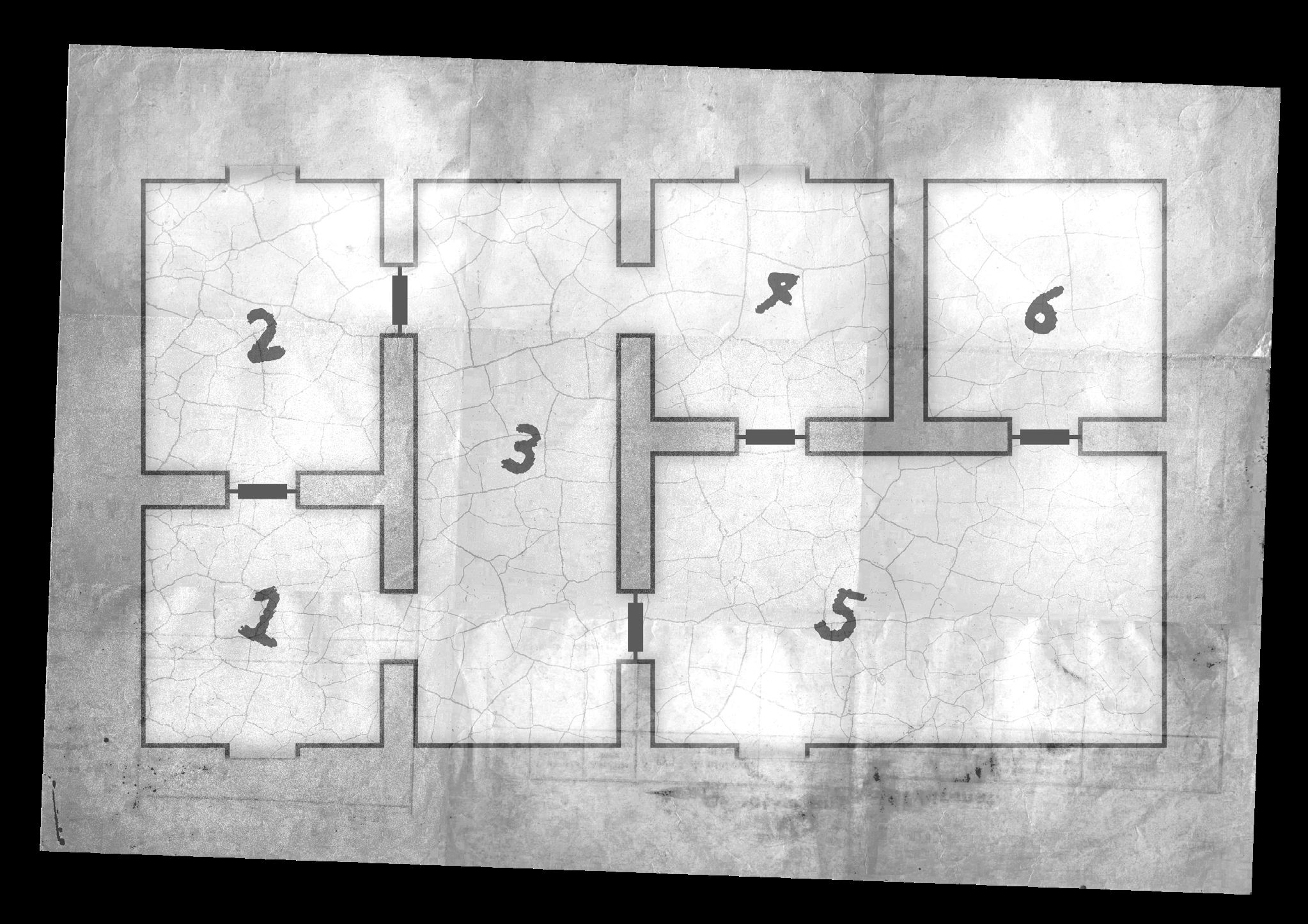
Room 1
The main entrance to the hunting grounds, littered with leftovers from past goblin hunters. The relative safety of a well-traveled path means this place can be used for a Nap, should the party need any rest.
Room 2
The central area of the hunting grounds, a large opening with numerous small tunnels surrounding it. Plenty of tiny skittish rats here, but they'll run away as soon as they notice the party, requiring the goblins to be discreet, quick, or both. If alerted, Giant Rats equal to (1 + Adventure Rank) rush in to attack.
Room 3
A vast area that appears to have once been a complex construction, but centuries of neglect have left it unrecognizable, now serving as the rats' primary nesting ground. Beyond a few Giant Rats standing guard, the party is besieged by near-endless Swarms of Rats — a great chance to collect their bounty, or die in the attempt! The Swarms flee if threatened by fire or anything else a rat would find just as scary.
Room 4
Noticeably quieter, home to a couple of Giant Rats that must've claimed it for themselves. Whether the party attacks or sneaks past, the opposite wall explodes into debris: a Mud Shark leaps out, killing and devouring one of the Giant Rats immediately before looking for more prey.
Room 5
The party finds the remains of a Goblin hunting party that bit off more than they could chew — little is left aside from mangled bodies, with rats still nibbling at them. A particularly attentive Goblin who investigates might notice signs of an attack far too savage for mere rats. After a while, (2 + Adventure Rank) bodies reanimate, turned into Redcaps by the Thingamagik and no longer friendly to their former colleagues.
Room 6
From all the clues, this should've been the lair of Yellow Fang, king of the rats and holder of the most prized tail of all — but the party finds only a large pelt with something moving beneath it. It reveals itself as a Goblin, awkwardly claiming to have tricked the rats into submission and become their mighty king, offering the party safe shelter before sending them on their way.
Yellow Fang is actually a Mymic that, after first feasting on the Goblins from Room 5 and evolving into a Doppelganger, alternates between preying on rats and the Goblins who come to hunt them. If the party fails to notice the deception and accepts its offer, they'll be ambushed during their rest. If they kill Yellow Fang and still need Rat Tails, they'll find the remains of dozens of devoured rats — plenty to finish the job.
Bestiary For This Adventure
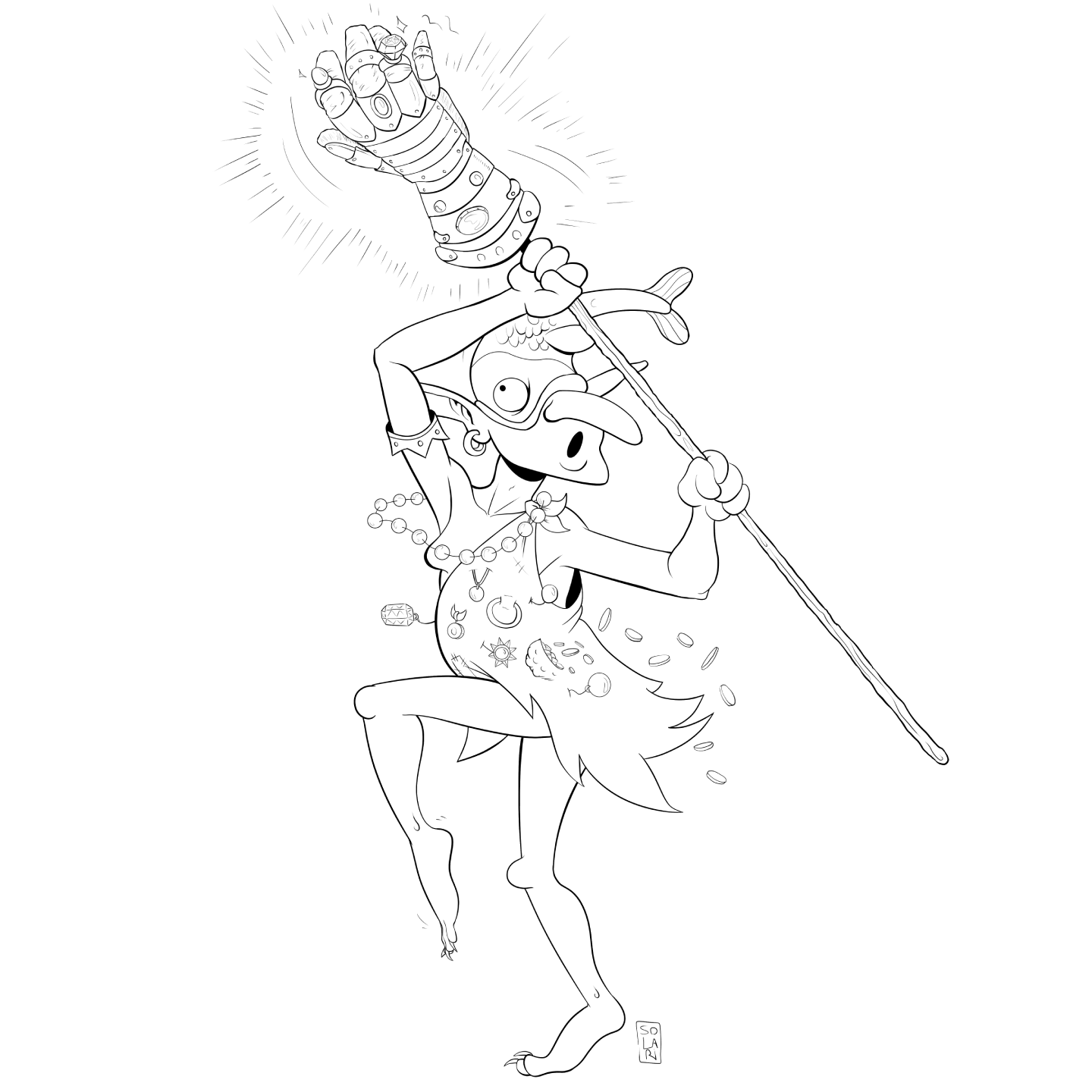
Giant Rat
Rank 1A rat swollen to the size of a hunting dog by residual Thingamagik. Matted fur, yellowed teeth, and a temper far shorter than its patience for goblins poking around its warren.
Qualities
- Pack Instinct — the Giant Rat gains +1 Rank for each other Giant Rat present in the same Challenge.
Swarm of Rats
Rank 3 (Mob)Not one creature but dozens, moving as a single hungry, chittering mass.
Qualities
- Mob — this isn't a single creature but a group acting as one. For each success against the Swarm, instead of marking a Counter piece, reduce its Rank by 1. Once Rank reaches 0, the Swarm is defeated.
- Thermically challenged — the Swarm flees automatically if exposed to fire.
Giant Snake
Rank 7Snakes are already considered symbols of greed, gluttony, and hubris for their ability to eat creatures larger than themselves; then imagine one as big as your house, with maddening venom and fangs as big as sabers.
Qualities
- Stunning Venom — when a PC receives a Dire Consequence as a result of a Challenge against a Giant Snake, they also receive the Status "Disoriented".
- Ensured Doom [Confused] — whenever a PC Leaves the Scene because of this Creature, they skip the Disgrace roll and immediately receive the "Confused" Disgrace.
Mud Shark
Rank 4Used to living in the filthy waters of dungeon levels aligned with earth, the Mud Shark is adept at lying in ambush in murky water, just as much as it can flee danger by burrowing into swampy mire with fins creepily similar to hands.
Qualities
- Muddy layers — a Mud Shark in an earth-aligned environment starts with 2 points of Protection.
- Emergency exit — if success in a Challenge would defeat the Mud Shark, it instead tries to flee by digging into mud: its Rank increases by 2, and if it's still standing once the Challenge is resolved, it flees the Scene safely.
Redcap
Rank 2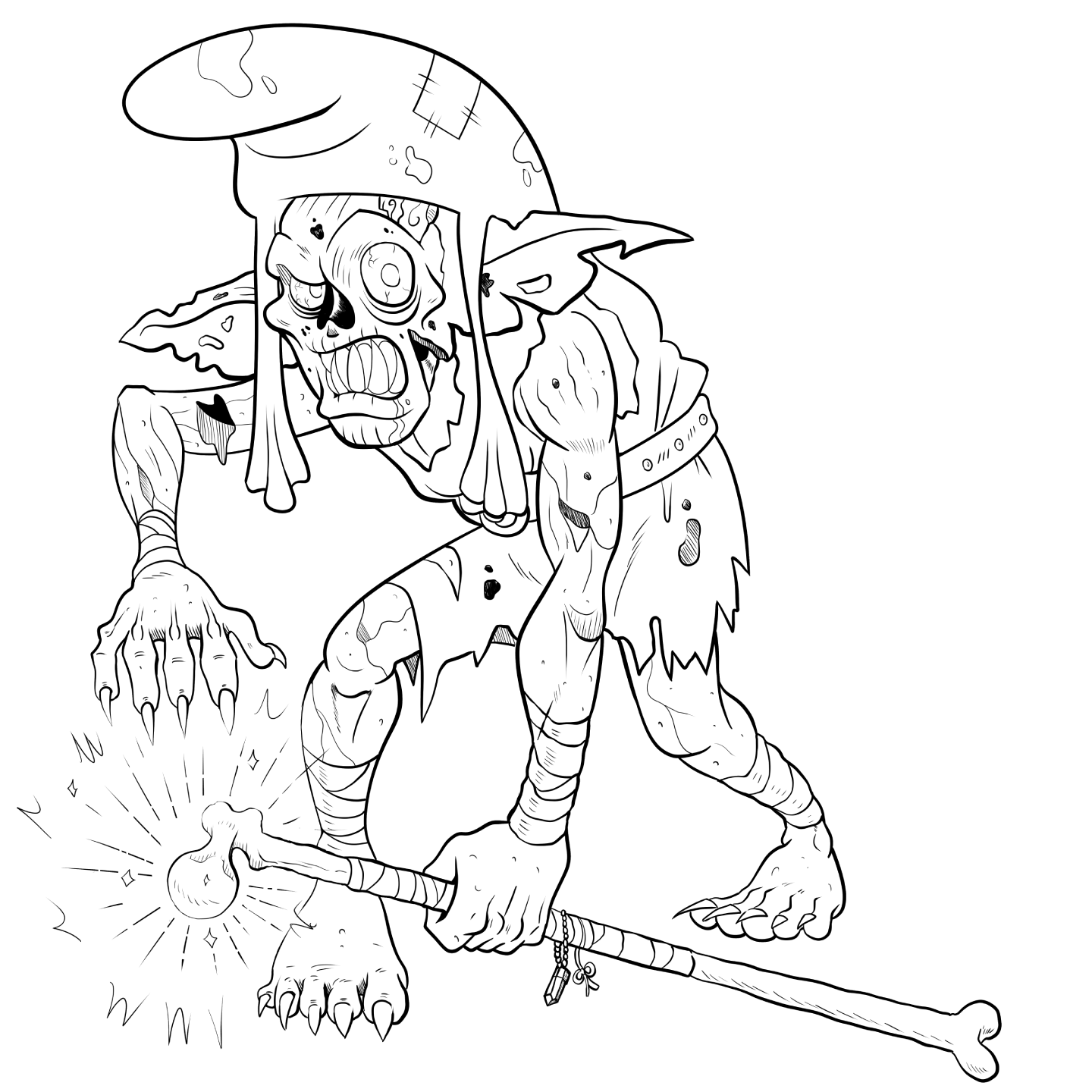
While a Goblin corpse can and will still occasionally turn into a more common Carrion like a Ghoul, sometimes their nature as wasted magical forces makes for a strange interaction with the Thingamagik, causing the dead body to rise back up with a wicked intelligence and a terrible ability to destabilize the magic in living creatures — feared and despised even by living goblins.
Qualities
- Muscle Memory — Redcaps seem to keep some of the skills of the original Goblin. When a Redcap enters the Scene, roll 1d8: on 1-3, it has the Fighter's "Bloody Payback". On 4-6, the Trickster's "They Got Me!". On 7-8, it triggers violent Thingamagik feedback, increasing its Rank by 1 the turn after it loses Health.
- Ensured Doom [Thingamagikhaos] — whenever a PC Leaves the Scene because of this Creature, they skip the Disgrace roll and immediately receive the Thingamagikhaos Disgrace.
Yellow Fang (Doppelganger)
Rank 5Rarely, when a mymic devours a smart enough creature, it learns to copy its identity. Not actually sentient, Doppelgangers tend to misuse figures of speech and spell out obvious facts in an aggravating manner as they attempt to lure new prey or infiltrate groups to prey upon, eventually exploding in a sacrilege of chitin, teeth, and limbs.
Qualities
- Animated Copycat — when a Doppelganger enters a Scene, the GM chooses a sentient creature it imitates almost perfectly. Almost. Confirming its true identity with certainty requires a Rank 6 Cunning Challenge, or an adequate Thingamagik.
- Ambush — the Doppelganger's Rank increases by 2 in a Challenge where it surprises prey by dropping its disguise.
- Extra materials — the Doppelganger heals 2 Health whenever it kills a PC or a Creature of at least Rank 1.
There's more from where they're coming from!
A bizarre monster gallery awaits you in the full Goblindom Core Book; from hexing black cats to bloodthirsty tooth fairies, you'll find a way to fail spectacularly that really suits you!
Get Goblindom on itch.ioPre-Generated Goblins
Heads Up!
Download the editable character sheet and fill it in with your pregen. Or grab a blank piece of paper, if you're old school cool.
Download the character sheetFour goblins, ready to play. Hand a sheet to each player and go.
All goblins: Darkvision, Omnivorous, Small and Pathetic (sneaking past something 3+ Ranks higher Scales Up).
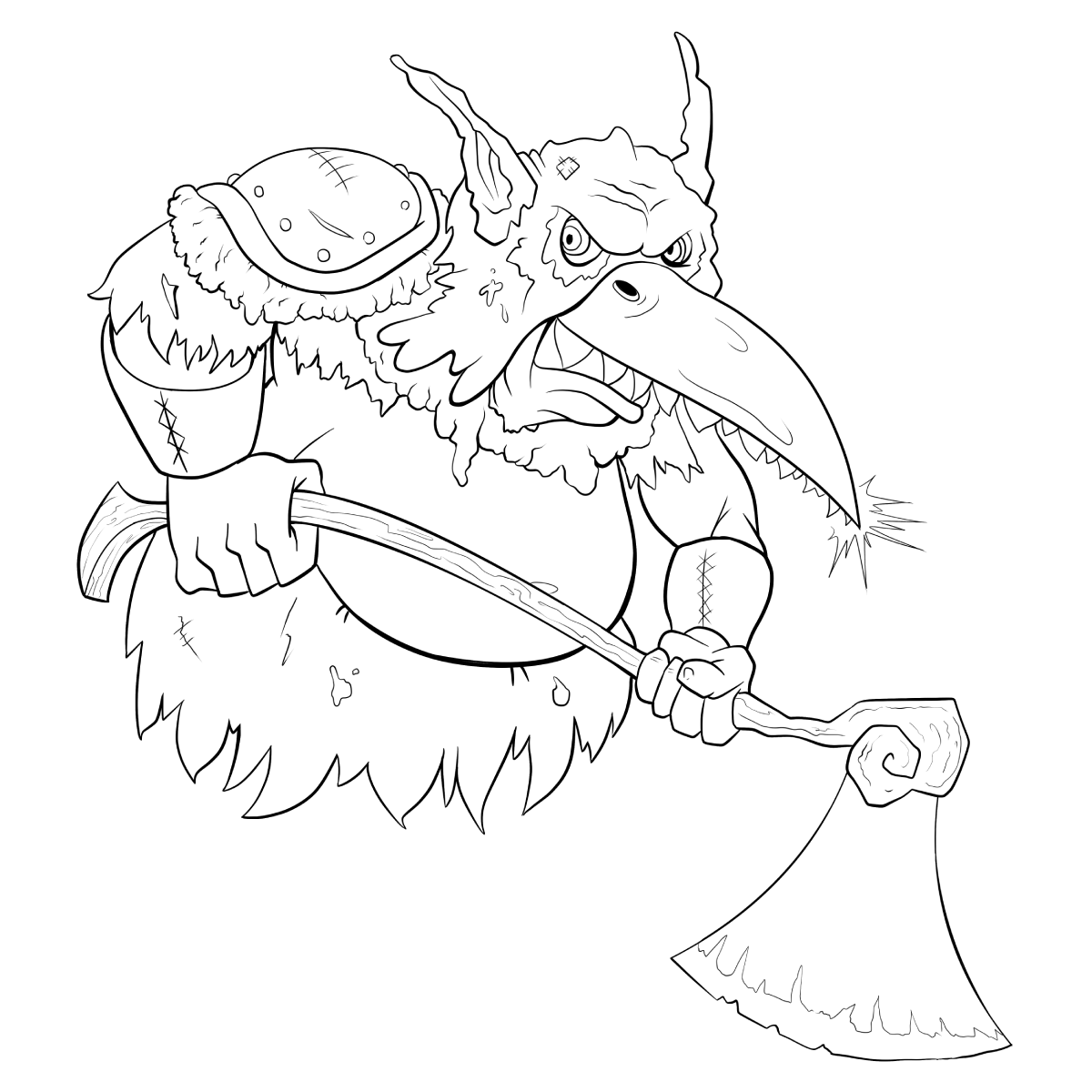
Sharpnose
Fighter · They're the best at what they do: having concussions.
Proficiencies
Hitting (Role) · Lifting · Shouting
Mutation
Beak
Equipment
Two-handed Axe [H] (Weight 2) · Fur armor [L] (Weight 1, 1 AP) · Goblin Mask — Total Weight: 3
Innate Quality — Bloody Payback
Free, when an attack causes you to Leave the Scene: deal 1 Damage to the creature responsible.
Role Qualities
- Rowdy Rage — free on a melee attack. 12+: -1 enemy Rank until your next turn. 8-11: same, but you take a Hardship next Challenge. 7-: You take a Hardship next Challenge, no benefit.
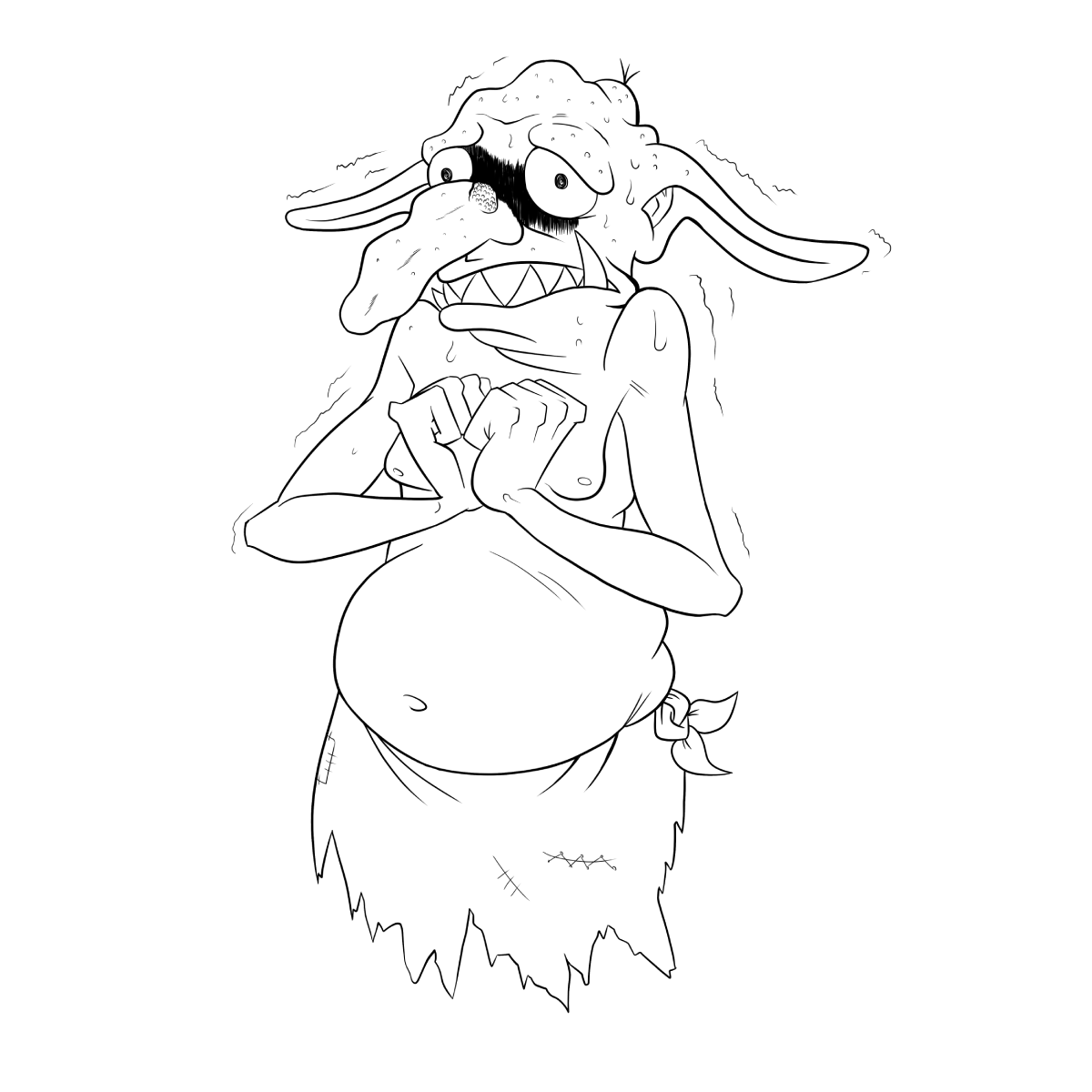
Hysterio
Trickster · Always in the shadows, ready to wimper.
Proficiencies
Sneaking (Role) · Sensing · Fiddling
Mutation
Monstrous Voice
Equipment
Knife (Weight 1) · Sling (Weight 1) · Flaming Oil (Weight 1) — Total Weight: 3
Innate Quality — They Got Me!
Reaction, once per Scene, when an attack involves you before any roll: fake your death, taking no roll, no Damage, no Status. You're ignored as long as you stay perfectly still.
Role Qualities
- Goblin Vanish! — reaction when attacked: inflict "Distracted" on the attacker. Usable as a Keyword by any PC to avoid, hide from, or ambush that enemy until spent.
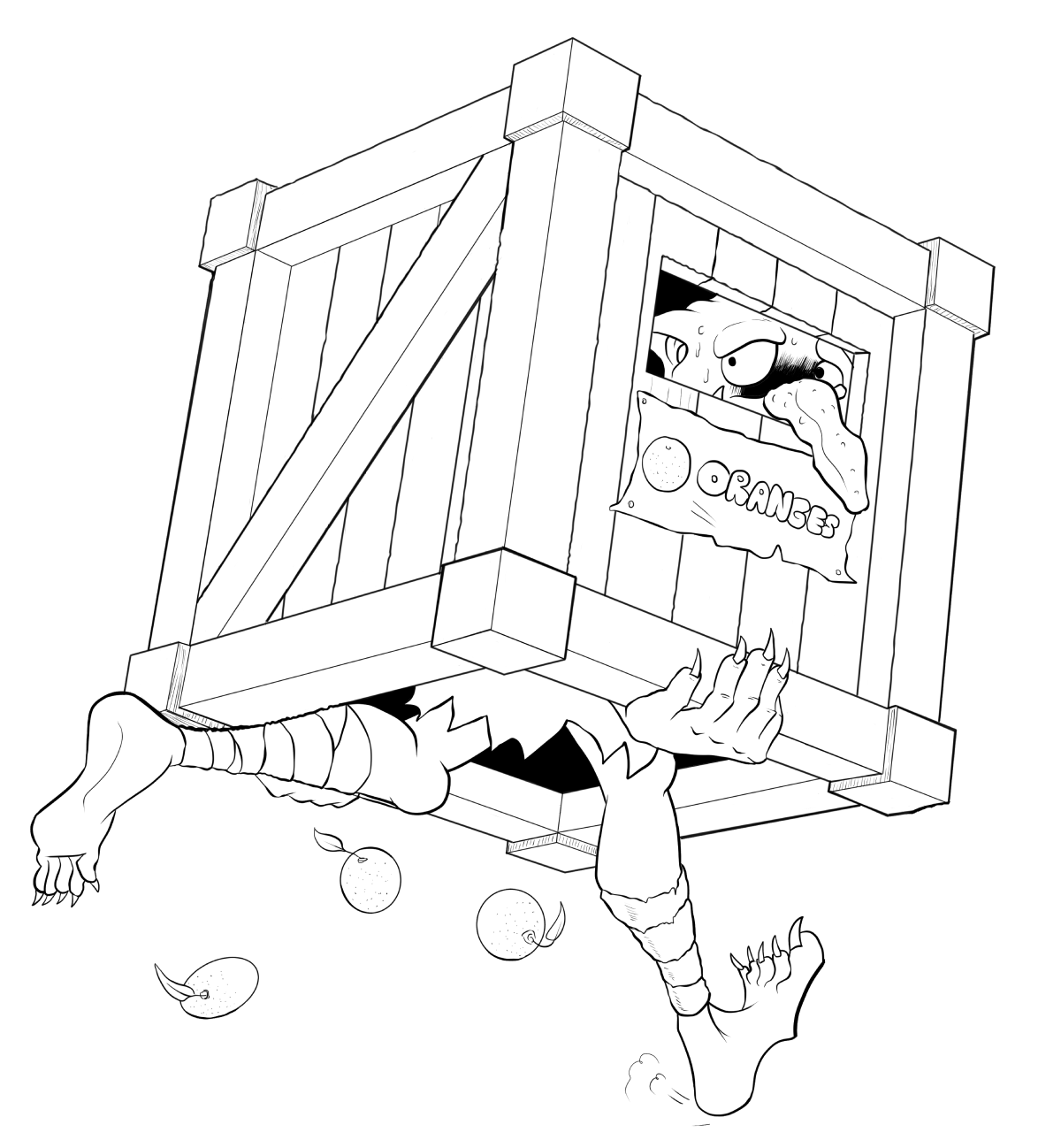
Crate Os
Trickster · They search for a "boy". Maybe to eat him?
Proficiencies
Sneaking (Role) · Hitting · Running
Mutation
Retractable limbs
Equipment
Short spear [L] (Weight 1) · Crate Armor [H] (Weight 2) · Portrait of a Boy — Total Weight: 3
Innate Quality — They Got Me!
Reaction, once per Scene, when an attack involves you before any roll: fake your death, taking no roll, no Damage, no Status. You're ignored as long as you stay perfectly still.
Role Qualities
- Slapfist — reaction when a nearby enemy attacks an ally: Support with 2 dice instead of 1, and take none of the Consequences.
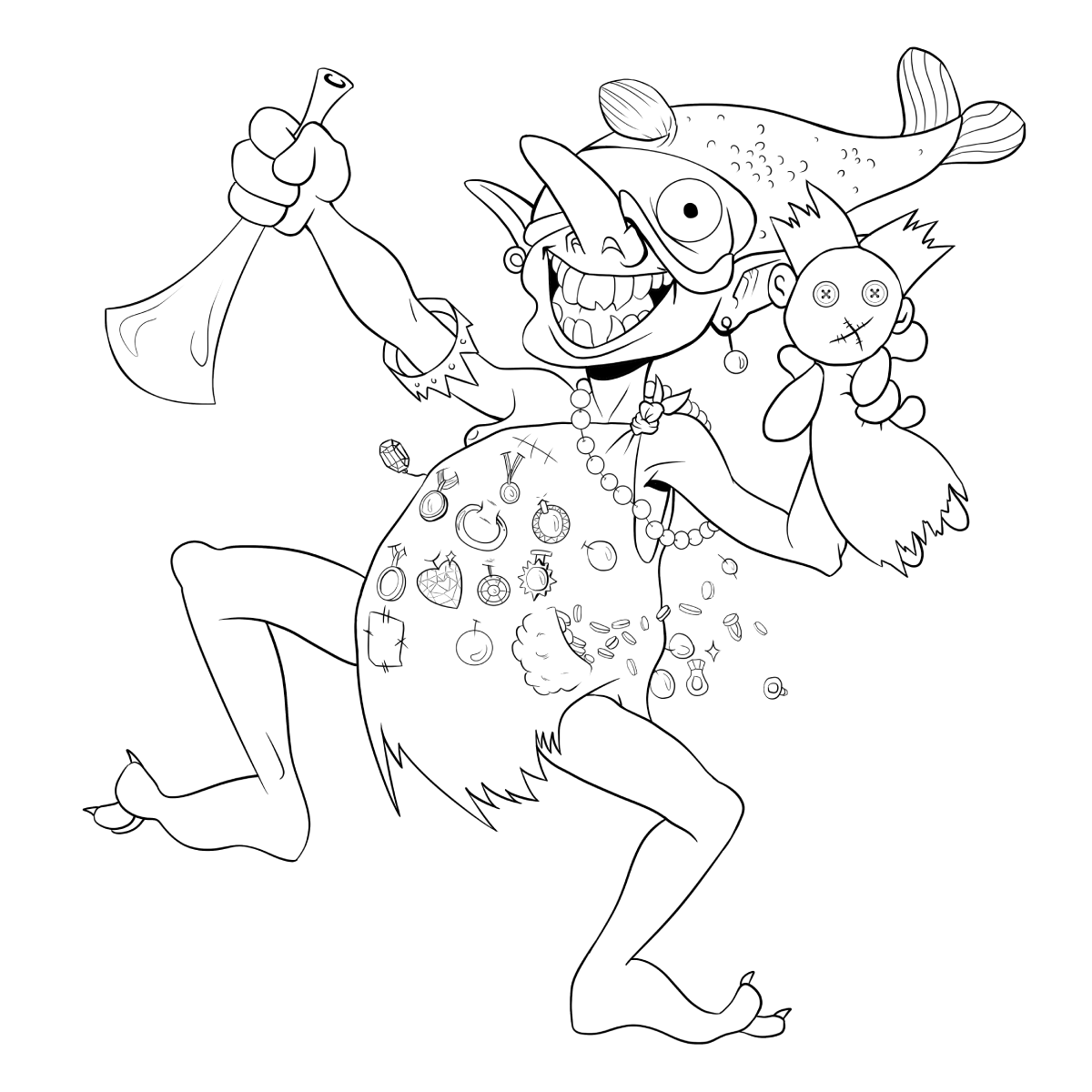
YEEARGHUUUGH!
Shaman · Sphere of Shinies · Hide your best cutlery, or else.
Proficiencies
Thingamagiking (Role) · Sensing · Fiddling
Mutation
Diminished size
Equipment
Magistick: a golden-plated trumpet (Weight 1) · Pet: a Twig-Trapper named Nubbin (no Weight) · Reflective Fish Costume [L] (Weight 2) — Total Weight: 2
Innate Quality — The Thingamagik
Permanently bound to the Sphere of Shinies. Casts prepared Thingamagiks with a Cunning + Thingamagiking Challenge. 3 Thingamagik Slots, refreshed on a Full Rest.
Known Thingamagiks (Sphere of Shinies)
- Bolt-O'Too-Much — Rank 2, Instantaneous. By drawing from the frustrating excess of the Shinies, the Shaman launches a sparky globe that intensifies light, sound, and other stimuli to unbearable levels, causing damage if successfully cast. This spell can also cause a lit fire to explode into a blinding light, or hit a metallic surface to produce a loud sound as bait.
- Look-At-It! — Rank 3, Concentration. The Shaman targets themselves or an even louder companion, possibly, but not necessarily, with their agreement, causing the target to become incredibly striking and, indeed, causing in anyone who sees them the deep desire to strike them down. As long as the Shaman is Concentrating on the spell, any Creature allied to the target has its rank increased by 1 in Challenges to sneak or ambush enemies. However, the target of the spell automatically fails any Challenge to hide, flee, or cause diversions aside from themselves.
- Great Crescendo — Rank 4, Concentration. The Shaman begins to gather the essence of the Shinies they can call upon by lighting fires, covering themselves with reflective material, and striking every object that makes even the slightest sound. The Shaman opens a "Great Crescendo" Counter with 8 pieces, which fills by 1 at the start of each of their next turns. When the Counter is complete, or the Shaman stops Concentrating, the gathered energies are released in a majestic spectacle of explosive lights and deafening music, dealing damage to as many creatures as there are marked pieces of the Counter. A Creature aligned with darkness takes twice the damage, and any effect tied to the Sphere of Grimness is nullified. Yes, this includes those made by allies as well.
Well, you scrolled a lot!
I hope you enjoyed the read. Now gather a table and try Goblindom with your best frenemies and see what happens. When you want more lore, more roles, and more monsters, the full game is waiting!
Get Goblindom on itch.io